The Racing Life of Brian Theaker
'I got a great memory for horses' names and what happened back then,’ said Brian Theaker, speaking so eloquently about his time as a stable lad for the late Peter Easterby. ‘I’ll start from the gateway as you walked into the yard. Alverton, Night Nurse, Little Owl, Sea Pigeon, King Weasel who won nine on the bounce, the grey Silver Shadow who was a good mare, Realt-Na-Nova, No Bombs who you know all about… When I started in 1978, almost every horse won races. We had some machines.’

The memories kept rolling, like a movie of Brian’s racing life. ‘I remember riding out in a blizzard and I couldn’t see anything in front of me. Head lad Ron Smithson ploughed the road, doing the job for the council, so we could get the horses out. I’d ride back in, my fingers and toes were frozen solid. I couldn’t jump off because my feet felt like they’d break into a thousand pieces, so I’d slide down, hooking my arm through the reins because I couldn’t feel my fingers. Then, warming up, I’d get hot aches.’
‘At Easterby’s, we were a family, we helped each other. There were two yards but we still lived together, socialised together, went shopping together and went to the seaside at the weekend together.’
Yet, despite coming from a large family in Goole with eight sisters and three brothers, Brian’s life started precariously. ‘I spent a lot of my early years in and out of hospital. After being born prematurely, I had quite a bit wrong with me – curvature of the spine, clubbed feet, jaundice and partial paralysis one side of my face – and was given three days to live. Also, I was born with half of a thumb on my left hand, which was amputated when I was four and my index finger moved over to make a thumb. My left hand has only ever been four digits but works as good as my right.’ Brian’s optimism shone through in his warm, melodic northern accent. When I worked in horseracing, some people never even noticed.’
Nowadays, Brian, 64, drives a mini bus for East Yorkshire Riding Council, taking children to special needs hubs in Beverley and Doncaster, returning later to pick them up. He has applied for a full-time position with the council, taking adults to centres in Withernsea. ‘It’d be a big bonus, so fingers crossed,’ he remarked.

Still living in his hometown, Brian is soon moving to Brough to live with his fiancée, Ann Cusworth. He owns a Jack Russell called Potter. Ann has a cat called Homer, and they’re trying to integrate the unlikely pair.
In June, Brian returned to his beloved racing when riding in the Macmillan Ride of Their Lives at York and this reignited memories of being at the centre of an innocent doping scandal more than fifty years ago…
How did you get into racing? By default. For the last four years at school, I was in the Air Training Corps (ATC) and I wanted to join the RAF. The careers officer arranged the interview in Hull, where the female officer looked at me and asked how tall I was. At the time I was 4'8" and to join the RAF, you had to be five foot so that killed that stone dead.
I had interviews with British Steel at Scunthorpe and the coal mine at Kellingley; I had brothers-in-law working in both places. When I went for my interview, again due to my size, they said I should go to college to train as an electrician, but I wanted to be a mechanic. At school, a friend Mark Newman suggested I become a jockey. I said, ‘I've never sat on a horse in my life and he answered, ‘They’ll train you.’
At the time, my mum worked at a canning factory. There, a friend of hers turned out to be a cousin of Peter Easterby, and she gave Mum the phone number. We didn't have a phone at home so I went down to the day centre, phoned him up. Two weeks after leaving school, Dad dropped me off, and I was on and off for ten years at Easterby’s.
Trainers worked for: I left Easterby’s twice and went back twice. I couldn't have been bad if they had me back both times! When I left the first time, I went to Alan Jarvis’ and stayed six months. He had five apprentices, two of which were his sons and he did say if I’d stayed longer, over the winter, I definitely would have got rides, that I was better than all the other five put together. I thought they were just words so I went back to Easterby's, who knew I'd come back as he'd never even sent my pass away.
When I was 20, I shattered my femur, and had six month’s recovery. When I went back, my riding was improving hand over fist and the leading apprentice Kevin Hodgson said I was good enough to ride in a race so go and ask for my license. But Mr Easterby said I was too light at 6st2lb and said to come back in a year, which I did but by then I was too heavy at 7st9lb.
Colin Tinkler, a jump jockey who’d had an accident up at Newcastle, had set up training and offered me a job. Within a fortnight of starting, I was in the office signing the papers to get my license.
So, you were a jockey then? I never rode a winner. I was riding them to get them fit for Mark Birch and the other jockeys. Even on my first ride, I was told to finish last. It doesn't matter now, I can say it. After all this time, the stewards can’t pull me in!
By the time I was too heavy, I was 9st4lb of no fat, just muscle. I was more into the training side by then, especially working out what makes horses tick. As a rider, I built up a good rapport with the dodgy and nervous ones, bringing them forwards, though never in a nasty way as I never carried a whip. They learnt to trust me and it worked. Over the years, I got on some horses that other people couldn't manage – I sorted them out. I loved it, if they got to the races and won, it was an even bigger bonus. I did get praise from the trainers and other staff.

Favourite racehorses: There's one I'll never forget and I still have his picture up at home. Mountain Hays. Alan Brown, who had been conditional, looked after him, but when he lost his claim, he suggested to Easterby that I looked after him from a three-year-old. Mountain Hays was such a character. We had muck sacks then, not wheelbarrows, and I’d throw it over his head and jab him like a boxer; he’d pull it off, rear up and spar back at me with his front legs. Down the lane, if I let him loose and ran zigzagging, he'd follow me. He loved Ayr, where he won seven and became an Ayr specialist.
Mountain Hays pulled like an absolute train – Alan was the only one to ride him at home and if he was away racing, I'd seen the other lads pulling straws to see who’d ride him. I remember, one Sunday, Alan was away and I said 'I'd ride him'. The head lad Jack Warrel wasn't keen, but I said, 'Trust me, I’ll ride this horse and I'll be fine.' Jack answered, 'Fair enough, if you wanna kill yourself, you can ride him.’
I was on Mountain Hayes and Alan Broderick (nicknamed Geordie) was on Saucelito. I started sixty lengths behind and Mountain Hays never picked up the bridle. I could see the old man Easterby stood by the gallops, scratching his head in disbelief in how this horse who ran off with everyone, just hacked around the gallop with a seven stone lad. The lads in the yard were up on the wall watching us! I think it was just the relationship me and the horse had. I looked after him for another five years. He wasn’t an Arkle winner or a Cheltenham Gold Cup winner but he was definitely my favourite. He was a bay with a little white star on his forehead, and was something else and very special.
Favourite racecourse: Ayr when I went with Mountain Hays. I also liked Newcastle; it was a successful course for me in terms of looking after winners. Another favourite is Ripon – it's a lovely little course so well maintained and well looked after.
Do you still go racing now? For the past few years, we've been to Beverley on
Ladies’ Day as that falls in the summer holidays. Our family is from Lincolnshire, so we've been to Market Rasen, which is another lucky track for me. Anna's Prince was the second horse I looked after and another two-mile tear away – he broke the course record there twice.
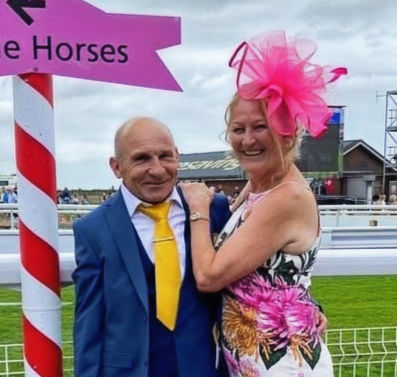
Which racecourse do you wish hadn't shut? I went to Teeside, had a winner with Ryeman, who went on to win an Arkle. That was a lovely course – it was a bit like Market Rasen, you could see all the way round. It's a housing estate now.
Favourite jockey: Alan ‘Brownie’ Brown over jumps. Brownie was such a good jockey. He won one of his two Arkles after the horse was on its knees, eating grass at the top of the hill. The jockeys were different breed in those days – they were bigger, rugged and more rough, now they're more like athletes.
Best days in racing: Any winner was a good day. But then sometimes it it didn't have to be a winner. Bollin Emily was second in the Portland at Doncaster; we also had the winner Phillippe Toro, ridden by Mark Birch and looked after by Russ Garrity, who went on to be a top northern jockey. If there were four-furlong races then Bollin Emily would've won at Royal Ascot but she didn't quite get five furlongs.
In the early 80s, I remember we sent five horses to Weatherby and had five winners, including Night Nurse first time out. The only reason we didn't have six was we didn't have a runner in one of the races. Believe it or not, that race was won by Mick Easterby’s Apple Wine. The Easterby family went through the card.
How has working in racing changed for the better? It’s better because they have a pay grade now. When I started in 1978, I was on £10 a week and for that £10, I'd get a week’s worth of shopping and still save a few pounds!
Accommodation has got a hell of a lot better because it used to be quite harsh. It must've been bought under much needed regulation. When we used to go racing, some of the accommodation on course was that bad. I went to Folkestone once and said, ‘If we ever come here again then we're not staying there!’
Trainers have part-time staff as well as full-time staff – some big yards even have a full team of part-timers. So, if you didn't want full-time now, you can work part-time. Back then, if you had a family or young children, you had to leave racing. There wasn't another option – you either worked full-time racing or you didn’t.
How has racing changed for the worst? The only negative I can think of – and I see it all over – you don't have your three or four horses to look after anymore. Nowadays, jobs are split up on an afternoon – one person cleans out feed managers, one cleans out water bowls, one does manes and tails, one picks out feet… You don't get the connectivity I did with Mountain Hays and Anna’s Prince. In my day, the horses were your life. You knew them inside out and felt their legs every day; you’d feel a lump somewhere or a young horse getting a splint – in my day things rarely got missed.
Now it's rush rush rush and the same riding out. It's straight up the gallop and back in, wash them off, on the walker and onto your next one. So on and so on.
When I was in racing, every lot, you’d walk round the paddock, go up the gallop and then round the village to cool off. Then, we’d give them a pick of grass and rub them off. Each lot would be an hour ,now it's thirty to forty minutes. I know it's hard because yards are bigger and they're all short staffed so they have to get as many horses out as they can, otherwise they go on the walker and miss a day training.
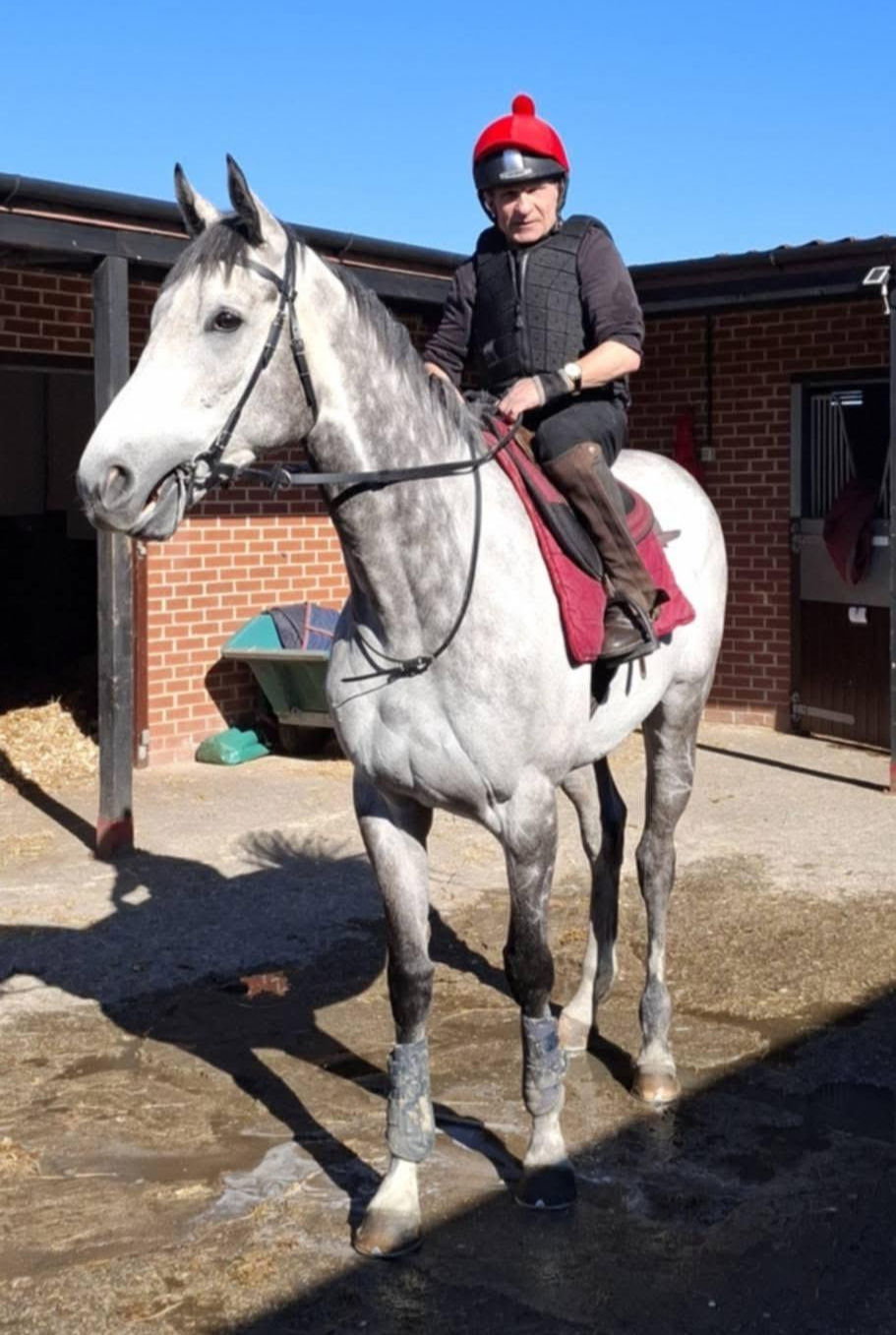
What did you love about working in racing? I loved the horses. When my dad dropped me off, it was the end of evening stables so I was sent to help feed. I'd never been near a horse before, let alone a racehorse. The buckets were big, metal and heavy, and it was mash night as all the horses had mash on a Sunday evening. I was told to follow Alan Brown round to what we called the new stables; he fed one and I went into the next one down, a horse called Bourneville. I open the door and this thing was stood there, looking at me – I thought it was a Tyrannosaurus Rex. I ran in, tipped the bucket half in the manger, half on the floor and legged it out. Brownie was stood there laughing, and Bourneville actually was the first horse I ever sat on.
After a week, I'd finished doing the beds as they rode out and was told to grab a helmet. As they came back into the yard, Alan put me on Bourneville’s back, let me ride him down to the village and back, leading me.
I learnt on Peter's daughter Caroline's pony. After morning stables, I carried the heavy saddle and bridle the half mile to the village. Lynn Mason, daughter of Norman Mason of Red Marauder-fame, lived on a nearby farm, and she helped me take the pony up and down the cricket pitch on the village green. I'd get run-off with. It took about two weeks before I got the hang of it. When I’d mastered the pony, they put me on the racehorses.
When I started riding, my wage was doubled to £20 a week. I thought I'd been overpaid – that was massive in those days.
Why did you leave racing? In the end, I'd got to that stage in life. I was in my forties and I used to always ride the nervous and dodgy ones. I just got a bit despondent – lots of things had gone on and my father died, I just decided enough was enough. I left, ended up in Hull and I don't mind saying that I was homeless for a while. I managed to overcome that, got a flat and a job with the bus company Stagecoach. I passed my Class D and spent over ten years driving buses. In 2019, I got a job with a local bus company doing school runs and after Covid, I got in with the council. Hopefully, I'll be with the council til I retire and a bit beyond that.
Tell us a story about the Mars Bar: In 1979, we had No Bombs, my Anna’s Prince and Nunstar going to Worcester midweek. We had to drop off Prominent King at Bangor on the way. The box driver was a man called Peddler – I can't remember his real name – and Peddler had a greyhound. That greyhound had preference on the front seat; he meant more to Peddler than any of us! As there was only room for two, Georgina Reine, who looked after No Bombs, and Gary Littlewood, who looked after Prominent King, sat up front were the older two. Being the youngest, Shamus and me went through the hatch and sat with the horses.

We went at 2 a.m. At about 5:30, Peddler pulled into a service station. Shamus and me filled our faces with crisps, pop and chocolate we’d bought. Prominent King was nearest ramp because he was getting off first and No Bombs was in front of me. He was looking at me – he hadn't had anything to eat since teatime, poor bugger so I broke off some Mars Bar and gave it to him, and then a bit more.
In them days, no one knew that there was stimulant in chocolate, a drug in caffeine, called theobromine. So, I didn't think anything of it. We dropped Gary off at Bangor and got to Worcester. The ground was fast but that suited No Bombs. He ran first and won, which we knew he would because he was the best horse in the race. Shamus’ Nunstar sadly had to be put down after getting an injury on the firm ground. Due to that, they pulled my horse out due to having bad legs. Prominent King had also won at Bangor.
About five weeks later, this furious fella came from the Jockey Club. We got called up to the house and worked out it was us lot who’d had been to Worcester and Bangor. Someone said No Bombs had failed a dope test and this guy had come up to interview us all. I told Shamus not to say anything about me giving him the Mars Bar – and fair play to the lad, he didn't. Georgina and Gary knew nowt as they were in the front. Me and Shamus stuck to our same story and said nowt.
Before I knew it, Peter had got summoned to Portman Square in London to explain himself. That same day, I was leading up at York. Back in the yard, Alan, who’d ridden No Bombs at Worcester, had collared Shamus, demanding to know what had happened. Shamus spilled the beans.
Peter Easterby was told he’d had a wasted journey – that they had ‘fresh evidence’ and would rearrange another date. As I was doing my horse up, I was told the old man was back from London and wanted a word with me. I thought my days were up and that was me down the road – I was gutted because I absolutely loved the job.
I was in tears telling him what happened. The governor was relieved to know the truth and was really really good about it. Four weeks later, after riding out my last lot, I was told to get my best gear on. Peter drove to York Station and got me a second-class ticket and him a first-class ticket, but he took me to the buffet car. I still remember he had Dover sole, new potatoes and vegetables and he bought me steak and chips. In London, I got called in first and I admitted it was all my doing. Then Peter got called in. He lost the race but thankfully kept his license and I kept my job.
When we came out, all the press were there. They asked my name but heard wrong with my Yorkshire accent so it was misspelt in most of the papers. The Daily Mirror’s headline was ‘Mars Barred’, and it was on other tabloids’ front pages. I never told my parents, but it was in the Selby Times and one of Mum's friends bought her the cutting, saying, ‘Is this your lad?’ I was famous for a short while; some people even named me the Mars Bar Kid.
For years, whenever I had a winner in the dope box, everyone took the mick, telling them to get a good sample. It was all in jest.

When I did the charity race, a lady rang me up out the blue. She was the area manager for Spillers horse feeds, who are owned by Mars. She tried to get them to sponsor me but it transpired they didn't want to be associated with any horse who’d got doped. Yet, she still sponsored me £100.
How did the charity race occur? I'd previously seen the race on TV, and had not long had my hip done. So, I reapplied a year later when I thought I could do it justice. For some reason, I got picked in to the final twelve! The Malton trainer Craig Lidster took me on, despite my hip replacement and a dodgy ticker.
One day, I went up to take photos and Laura, Craig's wife, got me on Mask Of Anarchy up the gallops. I knew it would give me an idea of where I was fitness-wise and how the hip was whilst riding. The old bugger tried running off with me but I managed to hold him back.
I thought I could do it, especially with six months to go. With my job, I could only ride out Saturdays, unless it was school holidays when I could get up about three times a week. It was hard and draining, especially as the weather is hotter now. The first few weeks were hard; I'd get home and be aching and aching. Then it slowly got easier and Craig was putting me up on two-year-olds. I could even jump on from the ground!

I thought I'd fail the tough fitness test and had developed tendonitis in my left wrist. When I realised everyone was finding it as hard as I was, that put me at ease. I was fitter than I thought I was.
A great bunch of people rode on the day. Anthea Lee gathered us to walk the course; we then got changed and had a photo shoot. The race itself didn't go as planned. I made a hash of the start. Intinso had been a devil going to the start but wasn't too bad at the start. As a few other were playing up there, I was half expecting the flag to be waived and not to start, but we were off. I
I got swamped; everyone had the run on me. As I'm climbing all over the back of these horses because he's quite strong, I didn't want to clip heels. I pulled him wide and it's a long sweeping bend at York so I'm swinging off him all the way round that. But the ones on the inside had the advantage, so they were gaining one length then two lengths. When I straightened up with four furlongs to go, I was five lengths off. I thought they'd come back to me but they didn't and Intinso came off the bridle. We were only beaten about eight lengths but more importantly, I raised over £4600 and between us, we raised over £140,000 with gift aid.
Afterwards, Intinso was retired and the girl who led me up, bought him so he will be re-schooled for showing. He is a beautiful looking horse and was turned out immaculately with plaited mane and tail.
We really had a great day. My family were there, and there was a buzz, especially as I bumped into lots of people I know, including Tim Easterby. I enjoyed the race even though we didn't finish where we wanted to and afterwards, we went to the bar, had a buffet lunch, lost a few quid on the horses and it was worth doing.
For my 16th birthday, my best friend Shelly gave me The Channel 4 Book of Racing and it became my bible. I read it like I should’ve studied a GCSE textbook. I never forgot one snippet within its pages: how a stable lad had fed a racehorse a Mars Bar, for it to fail a dope test, lose the race and hit headlines.
Later, I learnt chocolate contains theobromine and caffeine, which are both performance enhancing and thus banned. The anecdote, a lesson to all young stable staff in itself, literally was legendary. So, after reading about the very same ‘lad’ riding in a charity race four decades later, I had to do my utmost to get that interview. I loved every minute of our chat.


Comments